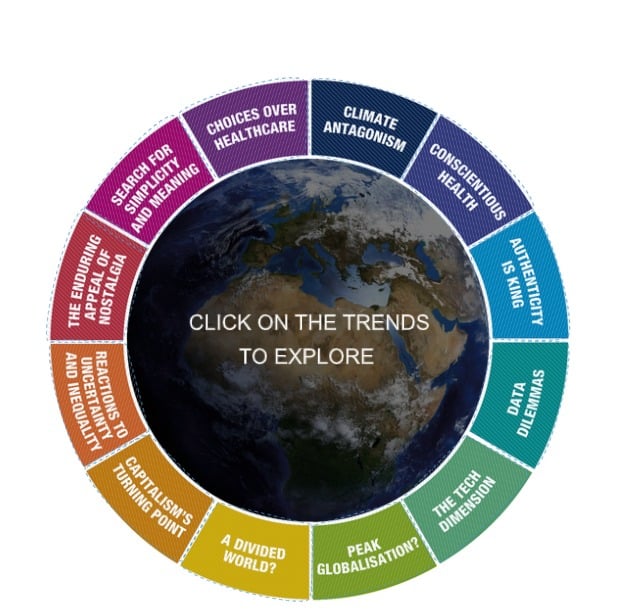
The World Is Shifting Fast- The Big Forces Driving The Future In The Years Ahead
Top Ten Mental Health Trends, Which Are Changing Our Concept Of Wellbeing In 2026/27Mental health has experienced an enormous shift in popular consciousness in the past decade. What was once discussed in whispered voices or ignored entirely has now become a regular part of conversation, policy discussion, and even workplace strategies. The change is still ongoing, as the way society views what is being discussed, discussed, or approaches mental health continues develop at a rapid rate. Some of the developments are actually encouraging. Others raise crucial questions about what good mental healthcare support actually entails. Here are the Ten mental health trends shaping the way we think about the state of our wellbeing into 2026/27.
1. Mental Health Enters The Mainstream ConversationThe stigma associated with mental health issues hasn't vanished although it has decreased dramatically in a variety of contexts. Public figures discussing their own experiences, workplace wellbeing programs are becoming more standard and mental health content that reach huge audiences on the internet have contributed to creating a culture setting where seeking help has become becoming more normal. This is important since stigma has been one of the primary obstacles to those seeking help. There is a long way to go in certain communities and contexts, but the direction is clear.
2. Digital Mental Health Tools Expand AccessTherapy apps including guided meditation and mindfulness platforms, AI-powered mental wellness companions and online counselling services have facilitated access to support for people who might otherwise be denied. Cost, location, wait lists and the discomfort associated with talking to someone face-to?face has long kept the mental health services out of easy reach for a lot of. Digital tools don't replace medical professionals, but they provide a reliable initial point of contact, an opportunity to build techniques for managing stress, and continue support in between formal appointments. As they become more sophisticated and powerful, their place in the more general mental health environment is increasing.
3. Mental Health in the Workplace Goes beyond Tick-Box ExercisesFor a long time, treatment for mental health was an employee assistance programme and a handbook for staff plus an annual awareness holiday. However, this is changing. Employers who think ahead are integrating the concept of mental health into management training, workload design evaluation of performance, and organisational culture in ways that go well beyond superficial gestures. The business benefits are becoming established. Affectiveness, absenteeism and shifts due to mental health are costly Employers who address the root cause rather than just symptoms have observed tangible gains.
4. The connection between physical and Mental Health Gets More AttentionThe notion that physical and mental health are two distinct categories has been a misnomer for a long time, and research continues to demonstrate how deeply related they're. Exercise, sleep, nutrition and chronic physical health issues all have effects that are documented on psychological wellbeing. Mental health influences physical outcomes in ways that are increasingly fully understood. In 2026/27 integrated approaches that focus on the whole person and not just siloed diseases are growing in popularity both in the clinical setting and the ways that individuals handle their own health care management.
5. It is acknowledged as a Public Health ConcernLoneliness has evolved from it being a social problem to a accepted public health problem, with significant consequences for both physical and mental health. Different governments in the world have introduced dedicated strategies to address social isolation. communities, employers, and technology platforms are being urged to think about their roles in either contributing to or helping with the problem. Research that has linked chronic loneliness with various health outcomes such as cognitive decline, depression and cardiovascular disease has established a convincing case for why this is not a minor issue and has huge economic and human cost.
6. Preventative Mental Health Gains GroundThe mainstay model of mental health treatment has historically been reactive. It intervenes only after someone is already in crisis or experiencing serious symptoms. There is a growing awareness that a preventative approach, the development of resilience, emotional awareness as well as addressing the risk factors before they become a problem, and creating environments that encourage well-being before issues arise, improves outcomes and decreases stress on services already stretched to capacity. Schools, workplaces and community organizations are being considered as areas where mental health prevention is possible at a scale.
7. copyright-Assisted Therapy is Getting Into Clinical PracticeResearch into the use for therapeutic purposes of psilocybin, psilocybin, and copyright has produced results compelling enough to turn the conversation away from speculation and into a clinical debate. Regulations in a number of jurisdictions are being adapted to permit controlled treatments, and treatment-resistant depression PTSD in addition to anxiety related to the death of a loved one are among conditions showing the most promising results. This is a rapidly developing and highly controlled field, but the trend is towards greater clinical accessibility as the evidence base grows.
8. Social Media And Mental Health Take a deeper look at the relationship between social media and mental health.The early story about the relationship between social media and mental health was fairly straightforward screens harmful, connections hazardous, algorithms poisonous. The story that emerged from more rigorous studies is much more complex. Platform design, the nature of user behavior, age security vulnerabilities that exist, and the types of content that is consumed interact in ways that resist the simple conclusion. Pressure from regulators on platforms be more transparent about the results to their software is increasing and the conversation is shifting from wholesale condemnation toward greater focus on specific causes of harm and how to deal with them.
9. Trauma-Informed Approaches Become Standard PracticeTrauma-informed care, or considering distress and behaviour through the lens of trauma instead of pathology, is moving from therapeutic areas that are specialized to the mainstream of education, learn more healthcare, social work as well as in the justice sector. Recognizing that a significant part of those who are suffering from mental health disorders have a history for trauma, along with the realization that traditional practices can be prone to retraumatize the patient, has transformed the way that professionals are trained and the way services are designed. The question is shifting from the issue of whether an approach that is trauma-informed is helpful to how it may be applied consistently on a massive scale.
10. Personalised Mental Health Care Becomes More AttainableWhile medicine is moving towards more customized treatment and treatment based on individual biology lifestyle and genetics, the mental health treatment is beginning to follow. A universal approach to therapy and medication has always proven to be an unsatisfactory solution. better diagnostic tools, digital monitoring, as well a wider selection of evidence-based treatments have made it more feasible in identifying individuals with treatments that work best for their needs. It is still in the process of developing but the current trend is toward a model for mental health care that's more adaptable to individual variations and is more effective in the end.
The way society is thinking about mental health and wellbeing in 2026/27 has not changed in comparison to the past as well as the development is not yet complete. What's encouraging is that these changes are heading toward the right direction toward more openness, earlier intervention, more holistic care as well as an acknowledgement that mental health isn't an isolated issue but rather a central element of how people and communities operate. For additional information, visit the most trusted giornalereport.it/ for further information.
 Ten Digital Security Changes That Every Digital User Must Know In 2026
Cybersecurity is now well beyond the worries of IT departments and technical specialists. In the world of personal finances, the medical record, professional communication, home infrastructure and even public services exist in digital form security of this digital environment is a practical problem for everyone. The security landscape continues to change faster than what most defenses can adapt to, fueled by the ever-increasing capabilities of attackers an ever-growing attack surface and the increasing sophistication of tools available to attackers with malicious intent. Here are ten cybersecurity trends that every user of the internet needs to know about as we move into 2026/27.
1. AI-Powered Attacks Can Increase The Threat Level SignificantlyThe same AI tools that are improving cybersecurity techniques are also being used by attackers in order to make their methods faster, more sophisticated, and easier to identify. Artificially generated phishing emails are virtually indistinguishable to genuine ones using techniques that informed users may miss. Automatic vulnerability discovery tools are able to find vulnerabilities in systems faster than security personnel can fix them. Deepfake audio and video are being employed as part of social engineering attacks that attempt to impersonate executive, colleagues and family members convincingly enough so that they can approve fraudulent transactions. The decentralisation of powerful AI tools has meant attacks that previously required an extensive technical know-how are now available to more diverse malicious actors.
2. Phishing is more targeted and The Evidence isCommon phishing attacks, including the obvious mass mails that ask recipients to click on suspicious hyperlinks, continue to be commonplace, but they are enhanced by targeted spear campaigns that include details of the person, a real context, and genuine urgency. The attackers are utilizing publicly available information from social media, professional profiles and data breaches to build communications that appear through trusted and known sources. The volume of personal data accessible to develop convincing pretexts has never ever been higher along with the AI tools that are available to create personal messages in a mass scale are removing the limitations on labour that stifled the extent of targeted attacks. Be skeptical of any unexpected communication, regardless of how plausible they seem to be, is becoming a fundamental capability for survival.
3. Ransomware Continues To Evolve And Increase Its TargetsRansomware, malicious software that protects a business's information and demands payment to pay for your release. This has transformed into a multi-billion-dollar criminal enterprise with an technical sophistication that resembles the norm of business. Ransomware-as-a-service platforms allow technically unsophisticated actors to deploy attacks developed by specialist criminal groups for a share of the proceeds. The targets have shifted from large corporations to schools, hospitals municipalities, local governments, as well critical infrastructure, as attackers have calculated the organizations that are not able to handle disruption in their operations are more likely to be paid quickly. Double extortion tactics, threatening to disclose stolen data if the payment is not received, are a regular practice.
4. Zero Trust Architecture Becomes The Security StandardThe previous model of network security presupposed that everything within an organization's perimeter network could be safe. The combination of remote work with cloud infrastructures mobile devices and more sophisticated attackers who are able to gain a foothold inside the perimeter have rendered that assumption untrue. Zero trust architecture, based upon the assumption that no user, device, or system must be trusted on a regular basis regardless of where it's located, is now the norm to ensure the security of a serious organization. Every request to access information is verified every connection is authenticated and the impact radius of a breach is capped to a certain extent by strict segmentation. Implementing zero-trust completely can be a daunting task, but the security improvements over models based on perimeters is significant.
5. Personal Information Remains The Key Information TargetThe commercial importance of personal information to both criminal organisations and surveillance operations mean that individuals remain top targets no matter if they work for a prestigious company. Identity documents, financial credentials Medical information, identification documents, and the kind and type of personal information that makes it possible to make fraud appear convincing are constantly sought. Data brokers holding vast quantities in personal information offer large consolidated targets, and their data breaches expose those who have never directly interacted with them. Managing personal digital footprint, being aware of the data that is on you and where it is you are able that limit exposure increasingly important for personal security in lieu of concerns for specialist companies.
6. Supply Chain Attacks Attack The Weakest LinkRather than attacking a well-defended target with a single attack, sophisticated attackers more often inflict damage on the software, hardware or service providers an organisation's success relies, using the trusting relationship between supplier and client as an attack method. Supply chain breaches can compromise many organizations at once with just one attack against a widely-used software component and managed service providers. The problem for companies to secure their posture is only as strong as the security of the components they rely on and that's a massive and challenging to audit. Vendor security assessment and software composition analysis are on the rise because of.
7. Critical Infrastructure Faces Escalating Cyber ThreatsPower grids, water treatment facilities, transportation technology, financial infrastructure, and healthcare infrastructure are all targets of cyber criminals and state-sponsored actors Their goals range in scope from disruption and extortion to intelligence gathering, and the preparation of capabilities for use in geopolitical conflict. A number of high-profile attacks have revealed what can be expected from successful attacks on critical infrastructure. They are placing their money into improving the resilience of critical infrastructure and are creating plans for both defence and intervention, but the complexity of old technology systems and the difficulty fixing and securing industrial control systems makes it clear that vulnerabilities are still widespread.
8. The Human Factor Remains The Most Exploited Human Factor Is The Most At-RiskDespite the advanced technology of Security tools and techniques, efficient attack methods still use human behavior instead of technological weaknesses. Social engineering, the manipulative manipulation of people to take actions that compromise security is the source of the majority of successful breaches. Workers clicking on malicious URLs sharing credentials as a response to convincing impersonation, or permitting access based upon fraudulent pretexts remain primary gateways for attackers throughout every industry. Security systems that treat people's behavior as a issue to be designed around instead of a capability that needs to be developed consistently underinvest in the training as well as awareness and understanding that can enhance the human layer of security more robust.
9. Quantum Computing Creates Long-Term Cryptographic RiskThe majority encryption that safeguards transactions involving money, and sensitive data relies on mathematical challenges that traditional computers cannot tackle in any practical timeframe. Quantum computers that are sufficiently powerful would be capable of breaking commonly used encryption standards, even rendering protected data vulnerable. Although quantum computers with the capacity of this exist, the possibility is so real that many government organizations and standards for security bodies are transitioning toward post-quantum cryptographic algorithms developed to block quantum attacks. Organizations that hold sensitive information with high-level confidentiality requirements must begin preparing their cryptographic migration in the present, not waiting for the threat to emerge as immediate.
10. Digital Identity and Authentication move Beyond PasswordsThe password is among the most problematic aspects of security for digital devices, combining ineffective user experience with fundamental security weaknesses that years of recommendations on strong and unique passwords did not be able to address in a sufficient way for a larger population. Biometric authentication, passwords, devices for security keys, and other approaches that are password-free are experiencing rapid acceptance as safe and user-friendly alternatives. Major platforms and operating systems are actively pushing away from passwords and the infrastructure for a post-password security landscape is growing quickly. The transition won't occur within a short time, however the direction is evident and the speed is increasing.
Cybersecurity in 2026/27 won't be a problem that technology alone can solve. It requires a combination of enhanced tools, better organizational strategies, more aware individual behavior, and a regulatory framework that hold both attackers and reckless defenders accountable. For individuals, the main realization is that having good security hygiene, a strong set of unique authentic credentials for every account scepticism toward unexpected communications regularly updating software, and a sense of what personal information is accessible online is not a guarantee, but helps reduce security risks in an environment where security threats are real and increasing. For more context, visit these reliable briefingroom.uk/ to find out more.